

For those who need a premium small-screen tablet, the iPad mini is a popular choice. But should you buy one now, or should you wait to see what Apple has in store for the next model?
Most buyers should wait – the next model is expected to bring meaningful upgrades. However, Apple isn’t expected to update the iPad mini until late 2026 or maybe even early 2027, and that launch date could slip further due to chip demand and wider supply constraints.
Here’s what the latest rumors say about the release date, key upgrades, and whether it’s worth waiting.
| Feature | Current iPad mini | New iPad mini |
|---|---|---|
| Release | October 2024 | October 2026 |
| Chip | A17 Pro | A20 Pro expected |
| Display | 8.3-inch LCD | OLED, possibly 8.5 inches |
| Design | Current design | Similar design, possibly slimmer bezels |
| Water resistance | No official rating | Improved resistance rumoured |
| Wireless | Wi-Fi 6E, Bluetooth 5.3 | Wi-Fi 7, Bluetooth 6, Thread |
| Cellular modem | Qualcomm | Apple C1X expected |
| Cameras | 12MP front and rear | 12MP rear and front cameras likely; landscape front-camera position expected |
| Apple Intelligence | Supported | Supported, with faster AI performance |
| Price | From $599 (was $499) | Unknown; OLED could push price higher |
| Biggest upgrade | — | OLED display, faster chip and newer connectivity |
Apple has not officially announced a launch date for the next iPad mini, but October 2026 now looks like the most likely release window.
Bloomberg’s Mark Gurman reported in July 2026 that Apple was targeting October for the OLED iPad mini release. Although a later report grouped the device among products expected in late 2026 or early 2027, newer evidence points back toward an imminent launch.
In September, MacRumors saw a leak from “Apple’s own code,” that included references to the unreleased iPad mini, along with product imagery showing some of its new features. The report said the presence of these assets suggests the device is likely to launch soon and noted that Gurman expects the new iPad mini to arrive by the end of October.
That would fit Apple’s recent iPad mini schedule: the current A17 Pro model was announced in October 2024. However, Apple has not confirmed an event or release date, so an October launch should still be treated as an expectation rather than a certainty.
The next iPad mini now looks likely to make a much bigger processor jump than previously expected. According to information discovered in Apple’s own code by MacRumors in September 2026, the new iPad mini is set to use the A20 Pro chip introduced with the iPhone 18 Pro.
That supersedes earlier evidence pointing to the A19 Pro. In August 2025, MacRumors reported that Apple code appeared to identify an A19 Pro-powered iPad mini, and that remained the leading expectation for much of 2026. The newer leak is more recent and specifically identifies the upcoming model with the A20 Pro, making that the strongest indication of Apple’s current plans. Apple has not officially announced the device, however, so its final specifications are not confirmed.
Moving from the A17 Pro to the A20 Pro would represent a major performance upgrade. The newer chip should bring substantially faster CPU and graphics performance, along with more capable on-device AI processing for Apple Intelligence, gaming, photo editing and other demanding workloads. It would also make the iPad mini unusually powerful for its size and narrow the performance gap with Apple’s larger iPads.
The current iPad mini has 8GB of RAM. Apple’s recent Pro-class iPhone chips have been paired with more memory, so the new model could receive an increase, but the September leak does not appear to confirm the iPad mini’s RAM allocation.
The processor may not be the only silicon upgrade. Apple is also expected to bring its N1 networking chip to the iPad mini, adding support for Wi-Fi 7, Bluetooth 6 and Thread. Cellular models are expected to adopt Apple’s C1X modem, replacing the Qualcomm modem used in the current generation.
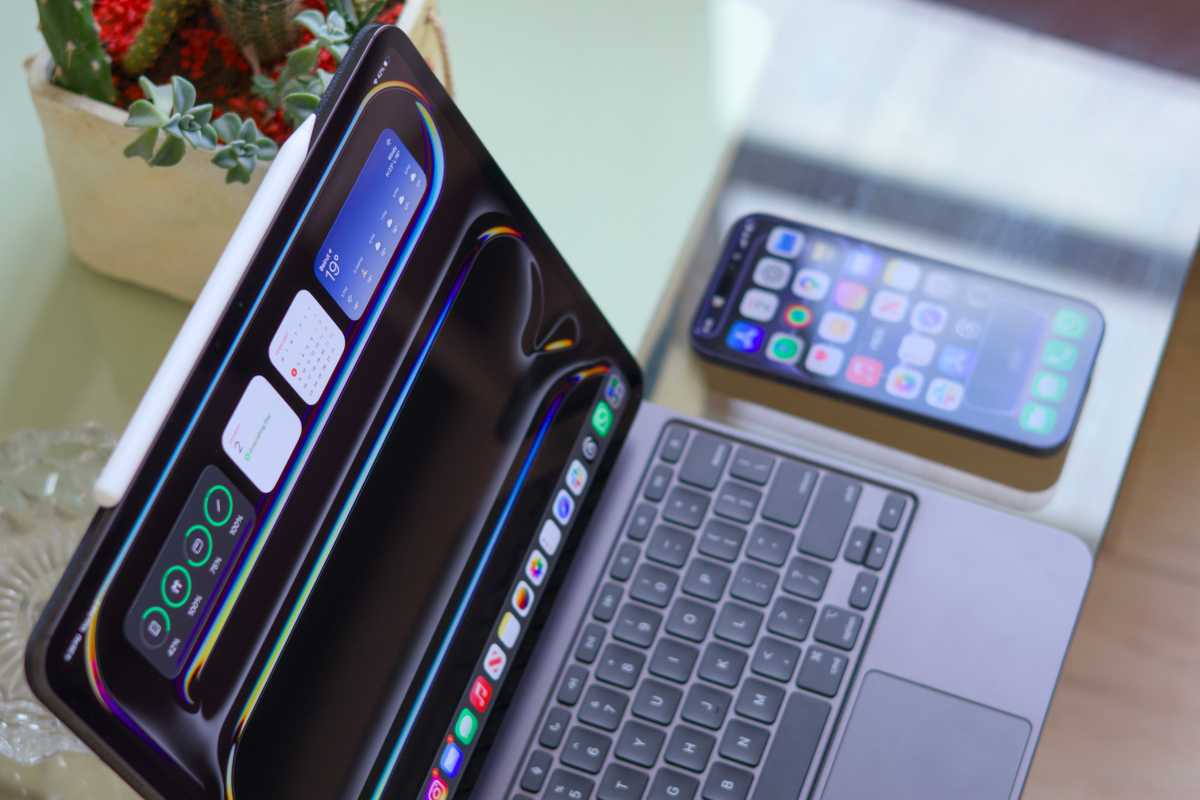
The M4 iPad Pro’s OLED Display could make its way to the iPad mini next.
Mahmoud Itani / Foundry
The biggest display upgrade expected for the next iPad mini is the move from LCD to OLED. Multiple reports, including those from Bloomberg and display-industry sources, have pointed to an OLED iPad mini arriving in 2026, and Samsung Display is reportedly already producing panels for the device.
OLED should bring deeper blacks, higher contrast, faster pixel response and improved viewing angles compared with the Liquid Retina LCD in the current iPad mini. Reports suggest that Samsung began mass production of OLED panels for the mini in June.
The exact screen size is less certain. Reports over the past two years have pointed to panels measuring between 8.4 and 8.7 inches, compared with 8.3 inches on the current model. A slightly larger display could be achieved through slimmer bezels without substantially increasing the size of the tablet, but the final panel dimensions have not been confirmed.
However, the iPad mini is not currently expected to receive the same display technology as the iPad Pro. Reports indicate that Apple will use a single-stack LTPS OLED panel, rather than the tandem OLED and LTPO technology used in the Pro models. That should keep costs lower, but the panel may not reach the same brightness levels as the iPad Pro display.
ProMotion also appears unlikely. One July 2026 report from Korean leaker Yeux1122, citing supply-chain information claimed that the OLED iPad mini will use an LTPS panel running at 60Hz, the same refresh rate as the current LCD model. That would mean the switch to OLED improves contrast and image quality without adding the 120Hz adaptive refresh rate available on the iPad Pro.
For buyers, the important distinction is that the next iPad mini could gain many of OLED’s biggest advantages without becoming a miniature iPad Pro. Current reports point to a less sophisticated single-stack panel, and there is no reliable indication that ProMotion is coming.

Apple
The iPad mini has retained the same design since its major redesign in 2021, and the 2026 model is expected to keep that overall look. However, Apple could increase the display size slightly while maintaining the device’s current dimensions.
In December 2024, analysts at Display Supply Chain Consultants (DSCC) suggested in a supply chain analyst report that the next-generation iPad mini could feature an 8.5-inch display, up from the current model’s 8.3-inch panel. The report indicated that the chassis size would remain unchanged, meaning Apple could achieve the larger screen through slimmer bezels rather than a larger body.
A larger display may also help the iPad mini maintain its place in Apple’s lineup as foldable devices arrive. Apple’s long-rumored foldable iPhone – often referred to as the iPhone Fold or iPhone Ultra – is expected to feature an inner display measuring between 7.6 and 7.8 inches with a 4:3 aspect ratio, putting it close to the iPad mini’s screen size. While still smaller than the iPad mini, such a device could appeal to some users who currently favour Apple’s smallest tablet.
Another rumor gaining traction is that the new iPad mini will be more water-resistant. That rumor comes from Bloomberg’s Mark Gurman, who in October 2025 claimed Apple was developing a next-generation iPad mini with a significantly more water-resistant chassis.
The more water-resistant design could involve changes to the speaker system as well as the chassis. Gurman previously reported that Apple was developing a vibration-based speaker that would allow it to eliminate some traditional speaker openings, reducing potential entry points for water.
Newly leaked Apple imagery, via MacRumors, appears to support that report. Images discovered in Apple’s code in September show a small groove cut into the top of the display glass, presumed to be for the speaker. MacRumors said the imagery appears to corroborate Gurman’s report of an all-new vibration-based speaker system.
It is not yet clear exactly how the new speaker system will work or how much additional water resistance it will provide. There is also no indication that Apple will give the iPad mini an official IP water-resistance rating.
There’s also a strong possibility of new color options. Apple currently offers the iPad mini in Blue, Purple, Starlight, and Space Gray, while the previous generation was available in Pink, Purple, Starlight, and Space Gray.
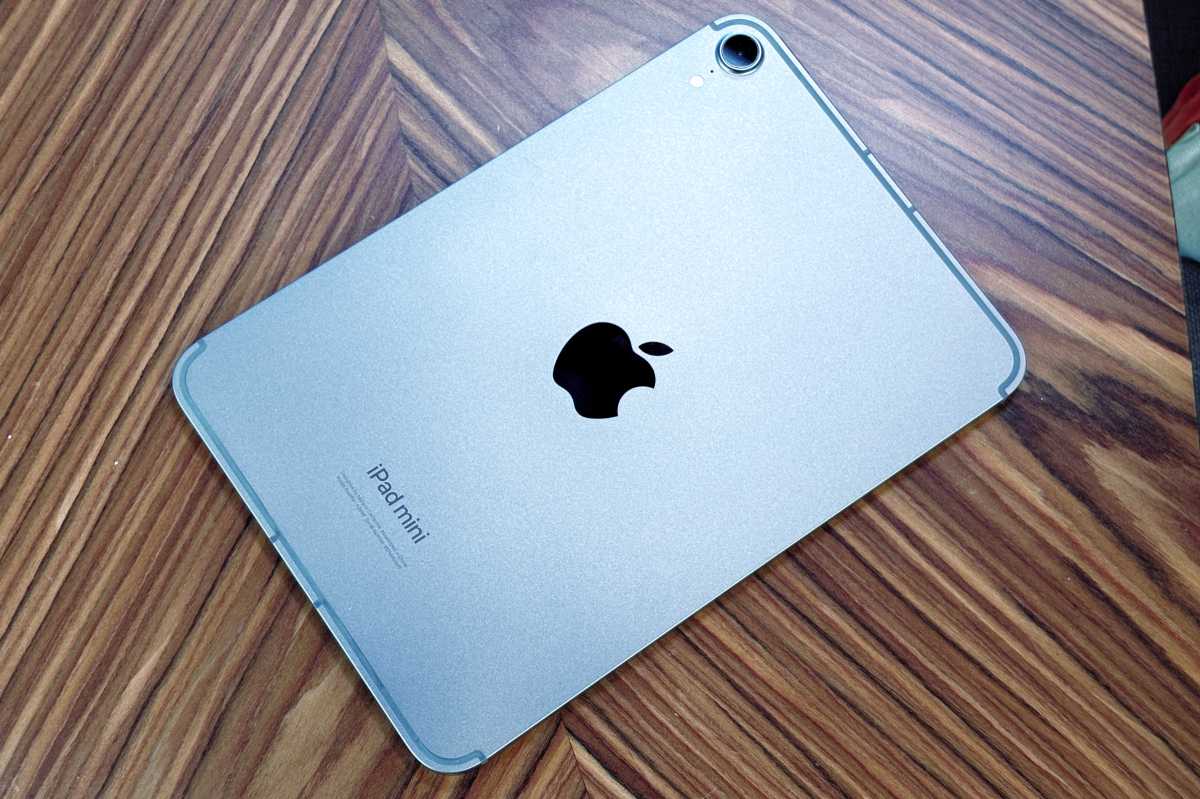
Apple is not expected to upgrade the cameras in the next iPad mini.
Foundry
The clearest camera change for the next iPad mini appears to be placement rather than camera hardware.
Leaked imagery discovered in Apple’s own code by MacRumors in September 2026 shows the front-facing camera moved to the landscape edge of the display. That would bring the iPad mini into line with the rest of Apple’s current iPad lineup and should make video calls feel more natural when the tablet is used horizontally with a stand or keyboard.
The current iPad mini has a 12MP Wide rear camera and a 12MP Ultra Wide Center Stage front camera. So far, there have been no credible reports suggesting that Apple plans a major change to the resolution or camera sensors themselves.
Even if the camera hardware remains unchanged, the expected A20 Pro chip could still improve image processing and computational photography. However, there are currently no reports of new camera sensors, higher resolutions or additional lenses.
The iPad mini had held the same $499/£499 starting price since its 2021 redesign. That changed in June 2026, when Apple increased the entry-level price to $599/£599.
With Apple having already raised the price this year, we think another increase with the next iPad mini is unlikely, although the move to OLED could put some pressure on costs.
Wait if: You don’t urgently need an iPad mini. October is now the leading launch window and this could be the largest mini upgrade since the 2021 redesign.
Buy the current model if: You need one immediately or find a substantial discount. With Prime Day running October 6–7, the current model could see worthwhile price cuts. At its full $599 price, however, it is difficult to recommend buying just before the expected replacement arrives.


