

Apple’s HomePod lineup could be about to undergo its biggest expansion since the original HomePod launched. Apple is reportedly preparing a new HomePod mini, a smart home display and eventually another full-size HomePod, as it builds a new generation of home products around Siri AI.
For much of 2025 and 2026, Apple’s revamped Siri was the thing holding those products back. That’s no longer the case: Siri AI has now arrived with Apple’s OS 27 updates, removing one of the biggest obstacles to launching the new hardware. The HomePod mini 2 appears to be particularly close, with Apple code discovered in September 2026 revealing images of the unreleased speaker and its five colors, while Bloomberg’s Mark Gurman indicated in July that a new HomePod mini, Apple TV and smart home display are among Apple’s upcoming home products.
The naming is less straightforward. “HomePad,” “Smart Home Hub,” and “HomePod Touch” are all placeholder names being used for different rumored products or concepts, rather than confirmed Apple names. In this article, we’re using “HomePod Touch” for the long-rumored idea of a HomePod-style speaker with an integrated touchscreen, while “HomePad,” “Smart Home Hub” and “Personal Hub” refer to the standalone smart display reportedly being developed for smart-home controls, Siri AI and video calls. We use “HomePod Touch” separately for reports about a HomePod speaker with a touchscreen built into it.
The smart home display could arrive as soon as October, while the full-size HomePod appears to be further away. There may ultimately be some overlap between these products, and some of the rumored concepts could be combined, renamed or never released at all. Below, we separate what is currently known about each device and when it is likely to arrive.
Apple is reportedly developing several new HomePod and smart-home products. The names below aren’t official Apple names; where necessary, we’re using placeholder names to distinguish between the different rumored devices.
| Placeholder name | What is it | When |
|---|---|---|
| HomePod mini 2 | New HomePod mini with the same basic design, new colors, faster processor and Siri AI support. | Fall 2026, potentially October |
| HomePad/Smart Home Hub | 6-7-inch smart display with Siri AI, Home controls, apps and camera; tabletop and wall-mounted versions expected. | October 2026, possibly later |
| HomePod 3 | Next-generation full-size HomePod with faster hardware and Siri AI support | In development, but reportedly not imminent |
| HomePod Touch | HomePod with a built-in 6-7in touchscreen. | Uncertain; no firm launch window |
| Robotic home screen | Display mounted on a robotic arm | 2027 or beyond |
| Security camera | Apple-designed home security camera | Timing uncertain |
Apple’s next generation of smart-home products appears to have been delayed largely because of Siri. The company was developing a much more capable version of Siri for Apple Intelligence, while the processors inside the current HomePod mini and second-generation HomePod weren’t designed to run Apple’s latest AI features.
That created a problem for new HomePod hardware. Apple was reportedly preparing products such as a new HomePod mini and smart home display around the capabilities of the redesigned assistant, but Siri’s delayed development meant the hardware couldn’t launch as originally expected.
That situation has now changed. Siri AI arrived with Apple’s OS 27 updates in September 2026, removing one of the main dependencies that had been holding back Apple’s smart-home plans. Recent reports suggest the HomePod mini 2 and Apple’s smart home display are among the products closest to release.
The full-size HomePod appears to be on a different timetable, however. Bloomberg’s Mark Gurman reported in September that Apple is testing a new full-size HomePod with Siri AI support, but said it “doesn’t appear to be imminent.” That means we no longer expect the HomePod 3 to necessarily arrive alongside the HomePod mini 2.
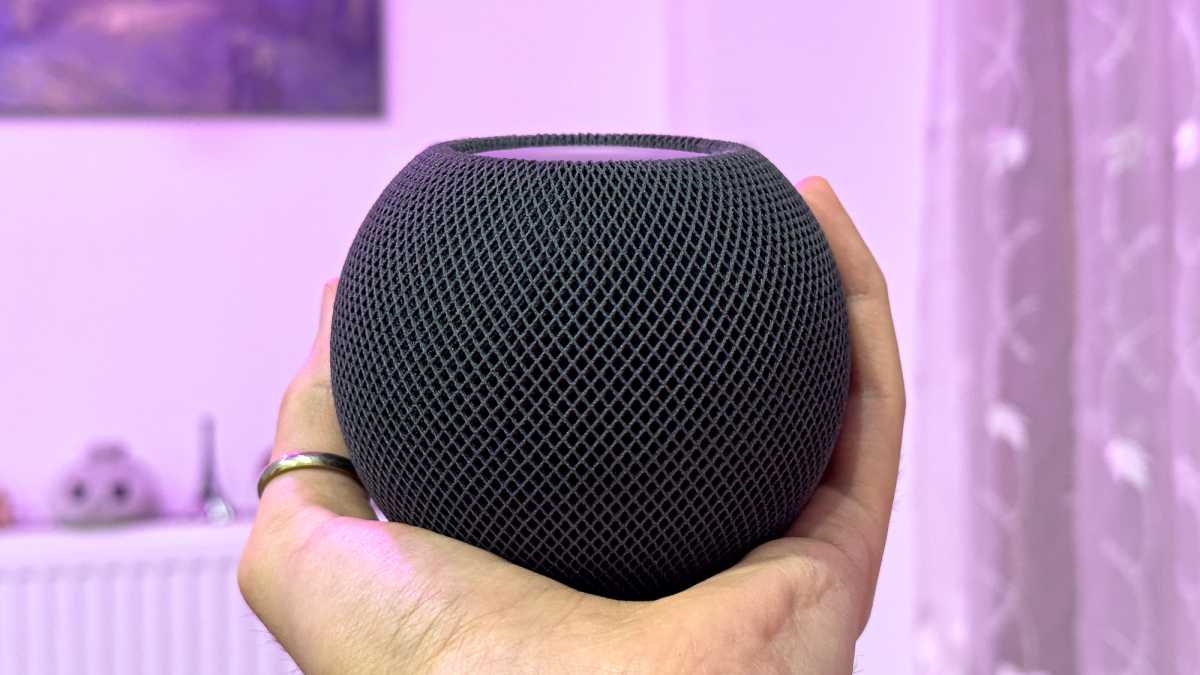
We’ll start off with the rumors about the HomePod mini 2. The HomePod mini is Apple’s smaller, more affordable smart speaker. The new model is expected to offer a new red color option, major processor upgrade and improved connectivity.
Foundry
Apple introduced the original HomePod mini in November 2020, so it is now nearly six years old and overdue for an update.
Rumours of a successor have circulated for more than a year. In January 2025, reports suggested a launch toward the end of 2025, and Bloomberg’s Mark Gurman subsequently said that new HomePod mini and Apple TV models were expected in fall 2025. Those products never materialised.
Attention then shifted to spring 2026, with reports suggesting Apple’s new smart home devices would launch alongside its redesigned Siri. However, that timetable also slipped as Apple continued work on its AI-powered assistant.
The latest reports now point to an October 2026 launch. According to Bloomberg’s Mark Gurman, Apple has several smart home products that are nearly ready but is waiting for the redesigned Siri to ship with the OS 27 updates before introducing new hardware.
If those plans remain on schedule, the HomePod mini 2 is expected to launch alongside Apple’s broader refresh of its smart home lineup this fall, with most reports pointing to October.
The current HomePod mini is available in Midnight, White, Blue, Yellow and Orange. In September, MacRumors spotted Apple code that revealed five colors for the new model: black, blue, green, pink, and white.
Bloomberg’s Mark Gurman reported in September 2025, that Apple has tested additional colors for the next-generation model, including red, but it appears that red didn’t make the final cut.
Otherwise, the HomePod mini 2 is expected to retain the same compact, spherical design as the current model, with no major external changes rumored. Instead, Apple is reportedly focusing on upgraded internal hardware, including an S9 or newer chip capable of supporting Apple’s latest Siri AI features.
Beyond the color changes revealed in Apple code, the main expected hardware upgrade is a newer processor capable of supporting Siri AI. Reports also point to newer Apple networking and Ultra Wideband hardware, along with possible audio improvements.
Apple’s first smart home display could arrive as soon as October 2026. Bloomberg’s Mark Gurman reported in a September newsletter that the device remains on track for 2026 and that Apple has been testing it extensively in employees’ homes.
The product had originally been expected earlier in 2026, but its launch was repeatedly pushed back while Apple completed the Siri AI technology that arrived with its September OS 27 updates. Gurman previously claimed the hardware has been ready for some time, with Siri the main reason for the delay, according to anonymous sources with knowledge of the matter.
Apple’s own software has also provided evidence that the product is approaching launch. References discovered in macOS identify J490/HomeAccessory17,1 and J491/HomeAccessory17,2, which are believed to be two versions of Apple’s smart home hub.
Another leaker, known as Kosutami, who has made accurate predictions in the past, posted on X on March 5 to predict: “Autumn. Home. Integrated with Pad. Now coming.” That somewhat cryptic post doesn’t necessarily refer to the HomePad, but it seems likely.
The HomePad – also referred to as Apple’s Smart Home Hub or home display – is expected to be a roughly 7-inch smart display designed to act as a central interface for the home. It would combine Siri AI, smart-home controls, FaceTime, media playback and Apple services in a device intended to be left in a kitchen, living room or other shared space.
Apple’s new Siri AI is expected to be central to the HomePad experience. Its delayed development appears to have been one of the main reasons the hardware did not launch earlier..
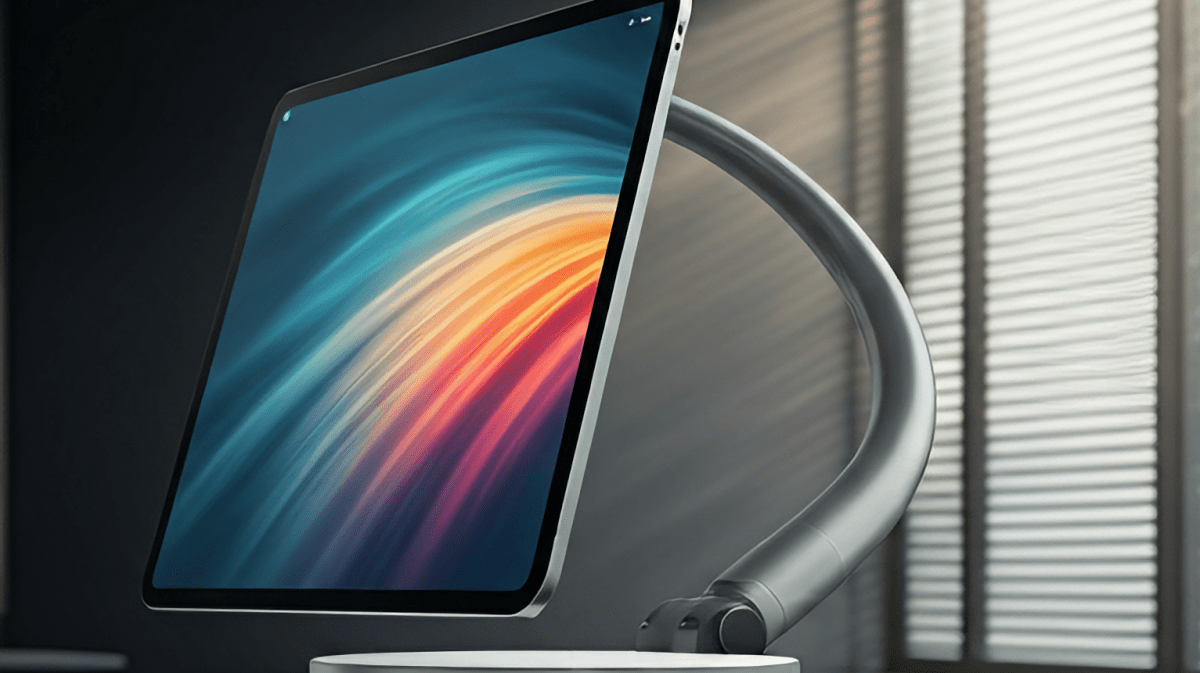
Imagen 3 (Gemini)
Reported features include:
Other software clues and reports suggest the device could also offer:
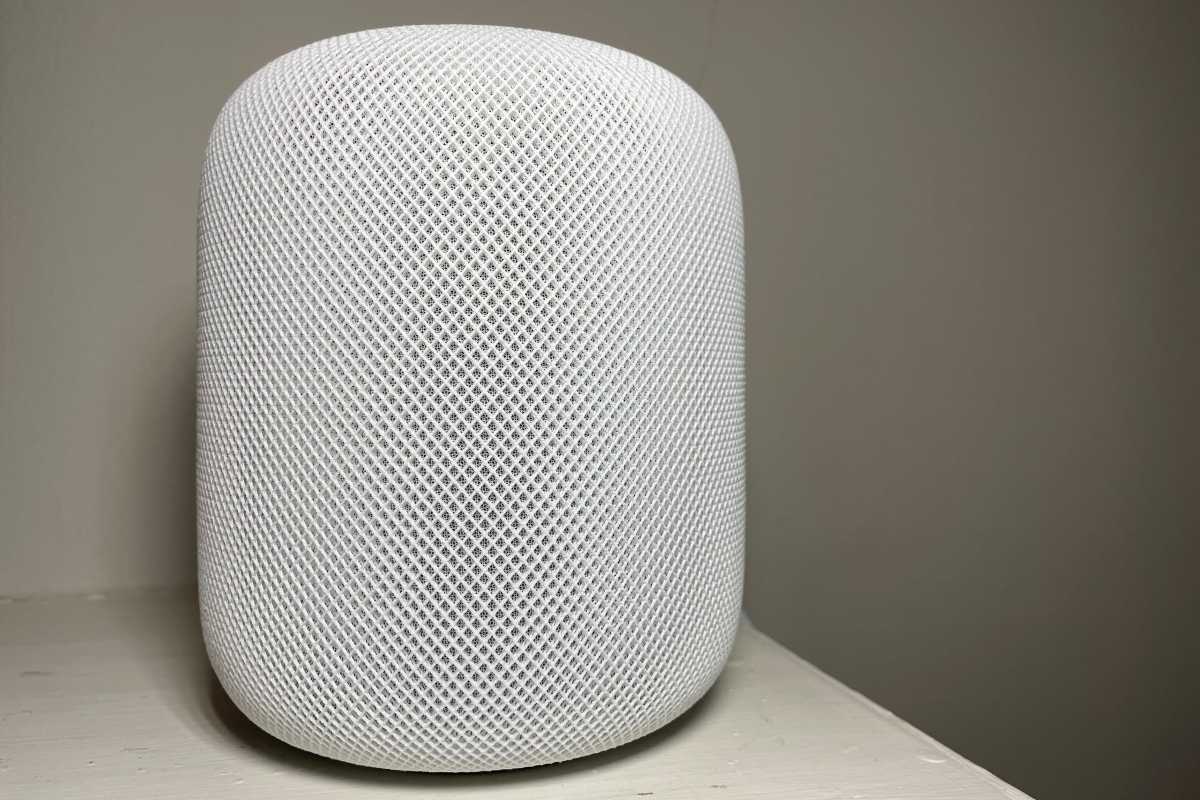
The larger HomePod is more expensive than the HomePod mini, delivering richer, louder audio with deeper bass and spatial audio. The next generation is expected to get a processor upgrade, improved connectivity and better sound.
Michael Brown/Foundry
Bloomberg’s Mark Gurman reported in September 2026 that Apple was testing a new full-size HomePod with Siri AI support, but that the release did not appear to be imminent.
Unlike the HomePod mini 2, there are relatively few leaks about hardware upgrades coming to the full-size HomePod. However, it’s expected to receive the same core internal upgrades needed to support Apple’s AI ambitions.
Expected improvements include:
In September, a post by itspdfu, who has a history of posting leaks online, said that audioOS27, the operating system for HomePod devices, supports Siri AI. The same source claimed that a future HomePod could also include new animations for its top display.
Beyond these internal upgrades, some reports suggest Apple is experimenting with a HomePod featuring a built-in display. That device is expected to be a separate product rather than a standard HomePod 3, and we cover those rumours in the next section.
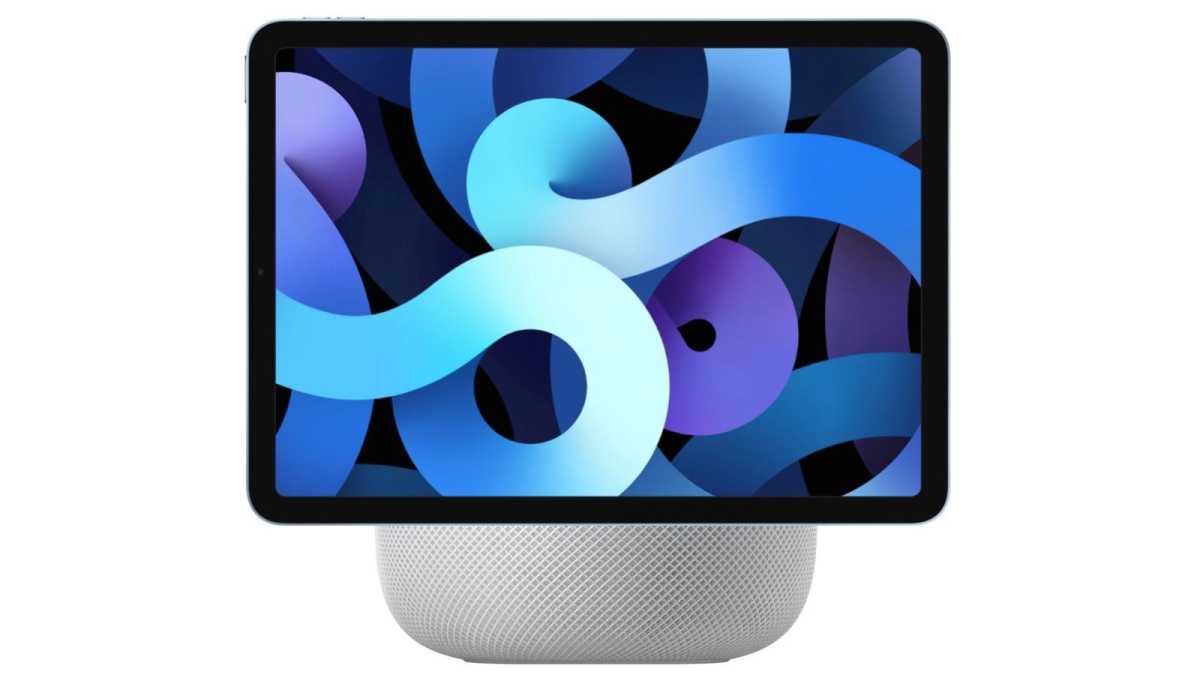
Apple has been rumored to be working on a HomePod with a screen for years, although exactly what form that product will take remains unclear. Older reports have described a HomePod-style speaker with an integrated touchscreen, sometimes referred to unofficially as a “HomePod Touch.”
There is considerable uncertainty here because some older reports about a “HomePod with a display” may describe the same product that more recent reports characterize as Apple’s HomePad or smart home hub. We are treating the HomePod Touch separately here only where reports specifically describe a HomePod-style speaker with an integrated screen.
That is a little more internally consistent and makes the distinction from the HomePad clear without implying that the HomePod Touch is definitely a separate product.
Foundry and Apple
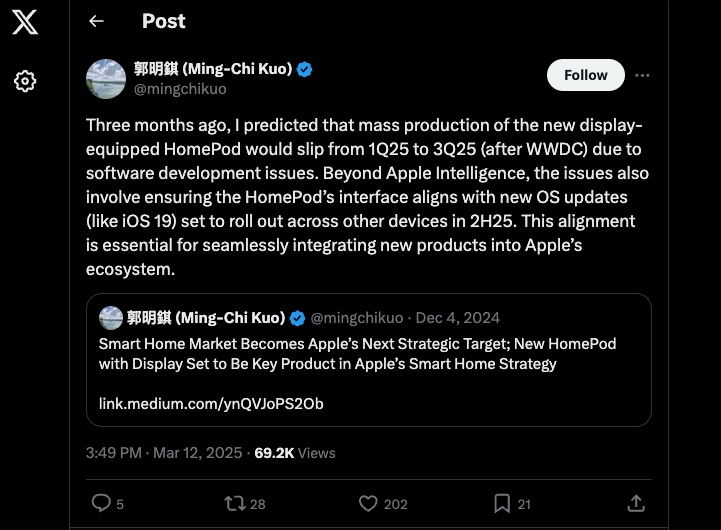
Apple has been working on redesigning the HomePod to include a display for some time. Back in March 2023, analyst Ming-Chi Kuo claimed Apple would “unveil a redesigned HomePod featuring a 7-inch panel.” Kuo initially expected this product to arrive in the first half of 2024, but that timeline slipped. In December 2024, he reported further delays had pushed the launch to after WWDC 2025, citing software development challenges. Then, in March 2025, Kuo suggested the device had been delayed again, due to Apple Intelligence setbacks.
Those predictions have all passed without a product appearing. Siri AI has since arrived, but there is currently no firm report giving this touchscreen HomePod a new launch date. It is therefore possible that earlier reports referred to a product that has evolved, been delayed further, or overlaps with Apple’s separately reported HomePad project.
HomePod with display incoming?
Foundry
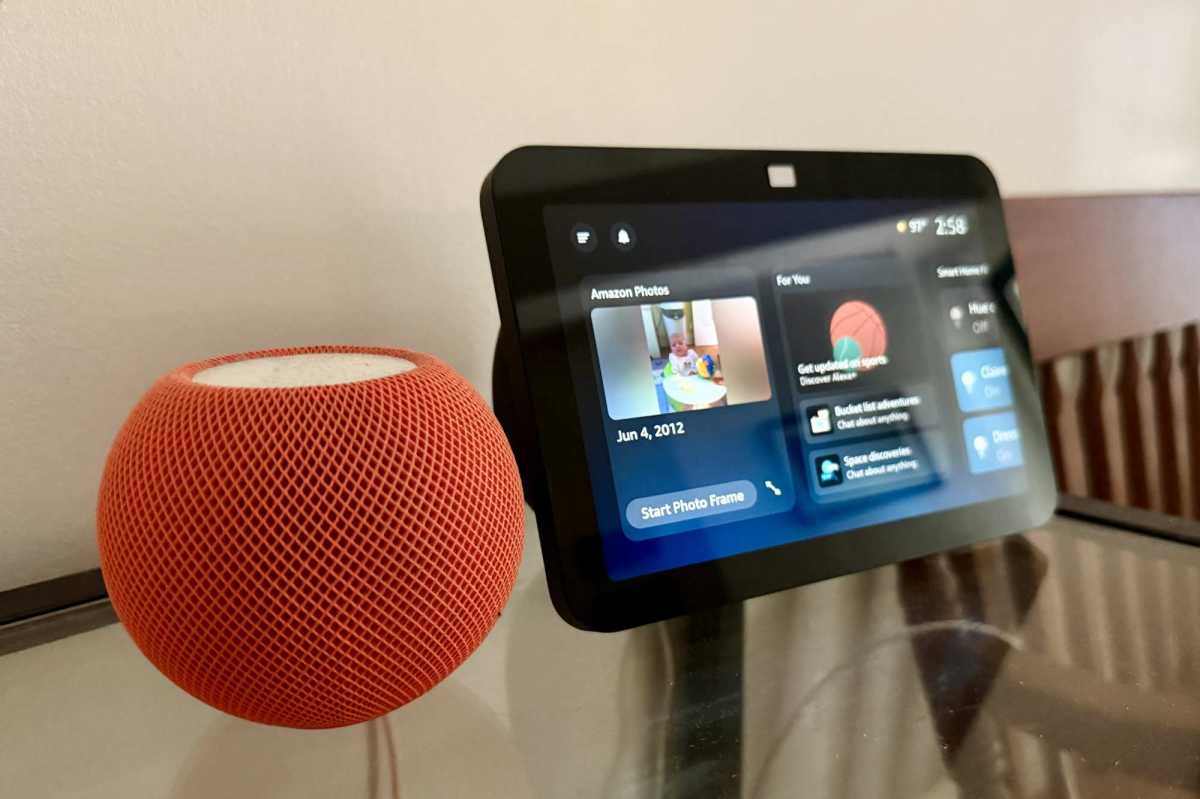
One of the biggest limitations of today’s HomePod is that almost every interaction relies on Siri. A built-in display would provide a more direct way to control music, manage smart home devices and access information, putting Apple’s device in direct competition with the Amazon Echo Show and Google Nest Hub.
According to current rumours, Apple’s display-equipped HomePod will feature a 6-7-inch touchscreen and run a touch-optimised version of homeOS, allowing it to function as both a smart speaker and a smart home hub. Unlike existing HomePods, it is expected to use a far more powerful A-series chip – possibly an A18 or similar – to support Apple’s redesigned AI-powered Siri and the more demanding graphical interface.
Rumoured features:
If accurate, this would represent Apple’s biggest expansion of the HomePod lineup since its debut, transforming it from a voice-first speaker into a full smart home controller.
Ben Patterson/Foundry
Apple is also developing a much more ambitious smart-home device that shouldn’t be confused with the HomePad expected first (see above).
As far back as April 2021, Mark Gurman described a high-end device combining a HomePod speaker, a touchscreen, and a camera mounted on a robotic arm that could follow the user around the room during video calls. Gurman has made various references to this over the years.
The device, previously identified as J595, is reportedly an iPad-like display attached to a motorized robotic arm. The arm would allow the screen to move and reposition itself, potentially following a person around the room during FaceTime calls or turning toward whoever is speaking.
Bloomberg has described it as a higher-end smart-home command center that could combine videoconferencing, home controls and security functions. Unlike the stationary HomePad, this appears to be a significantly more complex—and probably more expensive—product. Earlier reports have suggested a price that could reach around $1,000.
The robotic display is also believed to be further away than the HomePad. Previous reports placed it in late 2026 or 2027 at the earliest, and Apple’s more recent software leaks have focused on the J490 and J491 stationary home hubs rather than J595.
Reported capabilities include:
Reports suggest cameras could support FaceTime, security monitoring and potentially recognition of users or gestures. Apple has also previously filed patents describing HomePod-related gesture controls, although patents do not necessarily indicate features destined for a shipping product.
The biggest limitation of today’s HomePods isn’t their speakers – it’s their processors. The HomePod mini still uses the Apple Watch S5 chip introduced in 2019, while the second-generation HomePod runs on the newer, but still relatively modest, S7 chip from the Apple Watch Series 7.
Those chips are powerful enough for music playback, Home controls and existing Siri functions, but they were not designed to run the new Siri AI capabilities introduced with Apple’s OS 27 generation.
That hardware gap helps explain why Apple is expected to introduce new HomePod hardware rather than bringing the full Siri AI experience to the existing models.
Gurman has said the main hardware change he has specifically reported for the new HomePods is a faster chip, although he has not identified which processor Apple will use.
The display-equipped HomePod is expected to require substantially more processing power than Apple’s existing smart speakers. Because it will reportedly run a touch-based operating system alongside Apple Intelligence, most analysts expect it to use an A-series processor, with an A17 Pro or A18 among the leading predictions. Apple has not confirmed the chip, and these reports remain speculative.
Whatever processors Apple ultimately chooses, the goal appears to be the same across the entire HomePod range: replacing ageing Apple Watch chips with modern Apple silicon capable of delivering the full Apple Intelligence experience.
The prices for the HomePods increased in June 2026:
Apple raised HomePod prices in June 2026, so we wouldn’t expect the new models to return automatically to the previous $99/$299 price points.
However, a HomePod with a built-in screen could command a higher price. It may launch as a separate product altogether, potentially starting around $399/£399, or higher, depending on features.
Wait if: You are considering a HomePod mini. A replacement now appears close, with reports pointing to fall 2026 and Apple code already revealing the unreleased model.
Buy now if: You need a HomePod immediately and find a worthwhile discount. The current HomePod and HomePod mini still work well as speakers and smart-home hubs, but their older processors mean they aren’t designed for Apple’s newer Siri AI capabilities.
If you want a screen: Wait. Apple’s first dedicated home display appears much closer than the more speculative touchscreen HomePod.
September 2026: Apple’s OS 27 generation introduced its new Siri AI capabilities, removing one of the major software dependencies that had reportedly delayed Apple’s new home hardware.
Fall 2026: The HomePod mini 2 is expected, with October currently the leading possibility.
Fall 2026: Apple’s HomePad/smart home display could also launch, although its timing is less certain.
Beyond 2026: A new full-size HomePod is being tested, but Bloomberg reports that it does not appear imminent.
2027 or later: Apple’s more ambitious robotic home display could follow.
Timing unknown: Apple is also reportedly developing home-security camera hardware.


