
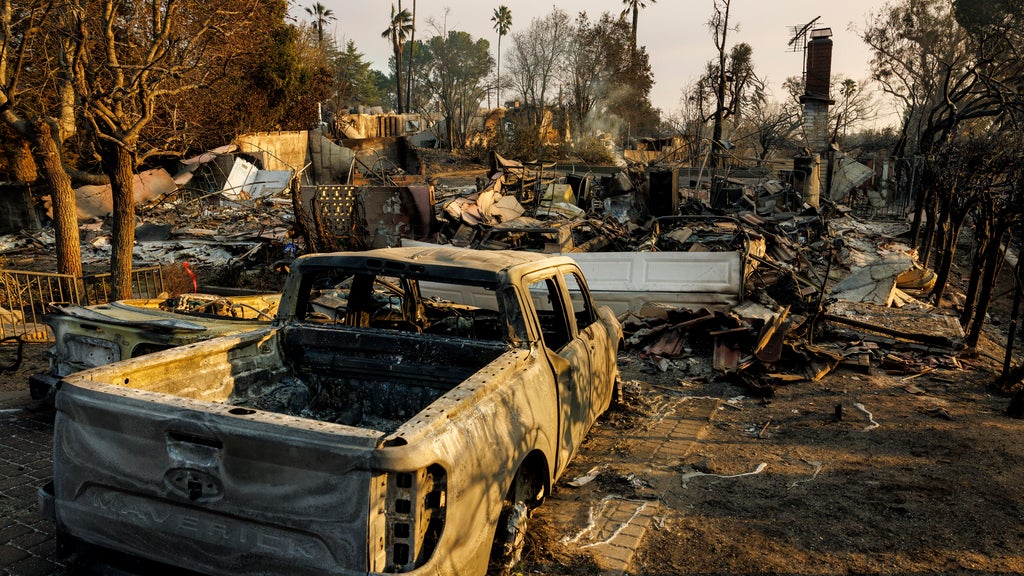
A new report broke down what went wrong during the Palisades and Eaton fires and offered recommendations for the future.
"We're seeing a lot of building but we're seeing a lot people left behind," said Nick Arzen, one of the thousands who lost their homes in the Eaton Fire.
Arzen is also the chair of the Altadena Town Council and he's happy to see the report released Friday from the UL Research Institute on what happened the day his community burned.
"What really stuck out from the beginning was that they didn't give an excuse to what happened," he said. "What they said was there was a connection of failures."
The ULRI released a one-hour presentation and a 700-page report, adding that the Los Angeles County wildfires "underscored the escalating threat wildfires pose to communities worldwide."
"The analysis found the incidents were the result of multiple interconnected factors rather than any single decision or event or system failure," ULRI researcher Steve Kerber said.
Researchers pointed to communication issues as one of the biggest issues in both fires. The study found that moving command centers and failing to connect with ground crews created situations where leaders did not know firefighters' locations.
"When you don't know where your people are, or you can't communicate with them, you don't have accountability," ULRI researcher Derk Alkonis said.
The report added that the communication issues led to problems with the Eaton Fire evacuations.
"The evacuation component was not highly prioritized within incident command structure," Alkonis said.
The report went on to say that the perfect storm of dry conditions, excessive fuel, strong winds, steep terrain and old homes not made to code left crews in a losing fight.
"This wasn't a failure of effort or of the resources brought to bare," Alkonis said. "It was a fire that outmatched what available suppression could do."
As these communities rebuild, they are applying the lessons learned to make their homes more resilient.
"This report was meant to look into the potential home hardening that could have helped us and we are already addressing that," Arzen said.
Arzen added that the county is currently missing $16 billion in federal funds, making things challenging.
"We can rebuild our homes, but if our streets and systems and our parks have yet to be rebuilt, what are we moving back to?" he said.


