
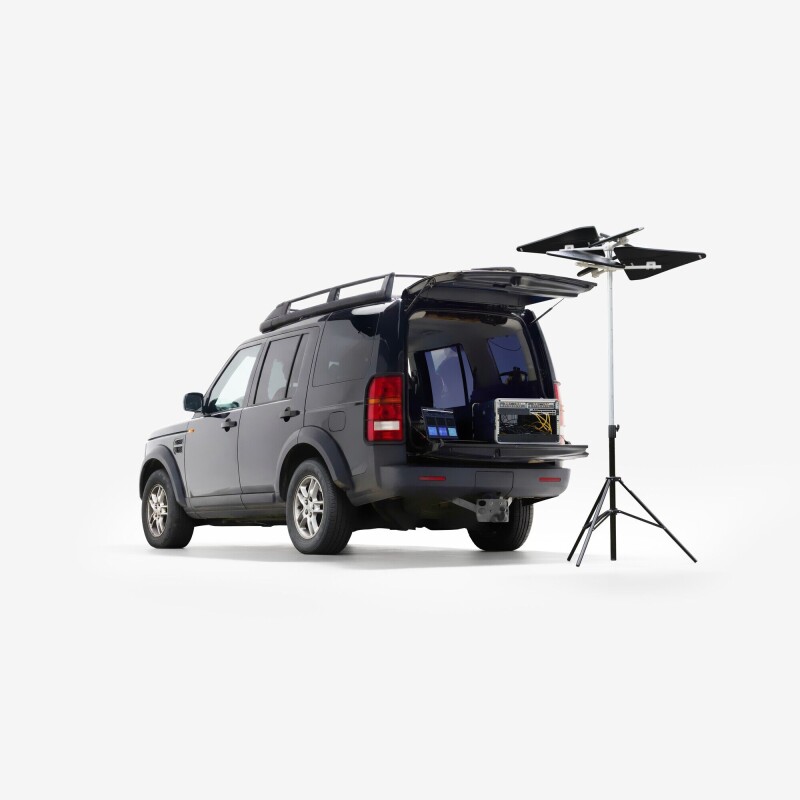
BAE Systems is developing a passive radar system it claims could track airborne threats at a fraction of the cost of conventional radar, using existing broadcasts rather than transmitting signals that could reveal its position.
The defense biz says its covert radar technology detects reflections of television, radio, and mobile network transmissions from airborne objects. That lets it monitor airspace without broadcasting its own radar signal.
Conventional active radar transmits radio waves and measures their reflections to locate objects. But broadcasting like this is the equivalent of using a powerful searchlight to see in the dark, making the radar station itself highly visible to anyone monitoring the same radio frequencies.
Passive radar is not new, but BAE says its use of commercial off-the-shelf equipment brings the cost down to as little as a tenth that of comparable active systems. The equipment is compact enough to deploy from an SUV.
BAE says it can track targets ranging from small drones to larger aircraft and provides a clear 3D air picture with data such as target speed, heading, range and altitude. This could make it suitable for law enforcement agencies and for guarding critical national infrastructure, as well as military users.
BAE pitches the system for sites such as airports, where avoiding interference with existing equipment matters. Because it doesn't transmit its own radar signal, passive radar avoids adding another broadcast to the mix.
"While people are sat at home watching TV, our new radar technology can use transmissions from those TV and radio broadcasts without disturbance to keep crucial infrastructure such as power stations and air force bases safe from drone attacks. It also provides a boost for armed forces, allowing a soldier to monitor the battlefield undetected," says BAE's product manager for Counter-Uncrewed Systems (CUxS) Chris Shepherd.
The system will undergo live trials throughout 2027 with potential law enforcement, defense, and critical infrastructure customers, BAE says.
Elsewhere at BAE Systems, the news is less rosy: The Financial Times reports that it plans to shed more than 1,000 jobs at its head office and air division in the UK. The company says the cuts will help it become more agile and meet government demands for "greater speed and efficiency" in delivering critical defense products. ®


